How Yoga Quietly Transformed My Health in Just Weeks
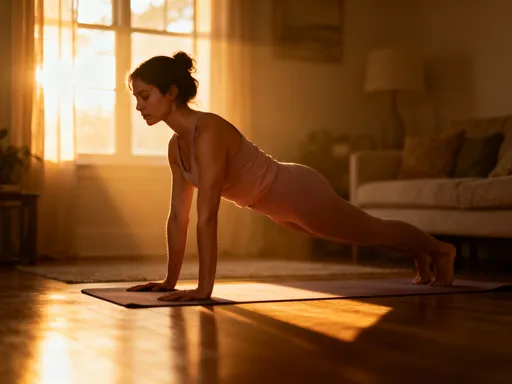
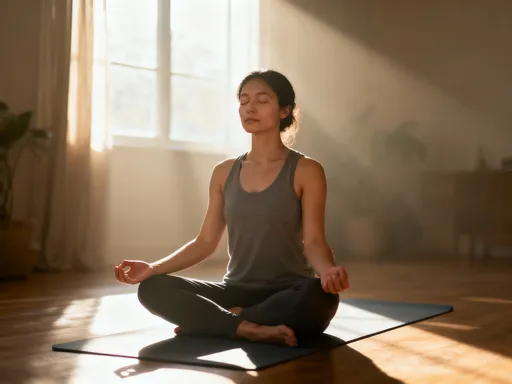
I didn’t expect much when I rolled out a mat in my living room—just some stretching, maybe less back pain. But within weeks, something shifted. My energy lifted, my sleep deepened, and my stress didn’t vanish, but I stopped letting it rule me. This isn’t about mastering poses; it’s about small, consistent movements that quietly rebuild your health. If you’ve ever felt too busy for fitness, this might be exactly what you need. What began as a tentative experiment became a cornerstone of daily well-being—not through dramatic change, but through gentle, intentional practice. The transformation wasn’t loud or flashy. It was subtle, like the way morning light slowly fills a room. And yet, its impact was undeniable.
The Breaking Point: When Stress and Stiffness Took Over
Like many women in their thirties, forties, and beyond, life had settled into a familiar rhythm: early mornings preparing meals, long hours at a desk or managing household demands, evenings spent tending to family needs, and little time left for oneself. The body bore the weight of this routine in quiet, accumulating ways. Waking up with stiffness in the lower back and shoulders became normal. Aching hips after standing in the kitchen for hours no longer seemed worth mentioning. Fatigue lingered even after eight hours of sleep, as though the mind never truly powered down.
The breaking point wasn’t a single event, but a growing awareness. One morning, reaching for a coffee mug, a sharp twinge in the neck made me pause. Another day, climbing stairs left me winded in a way that felt disproportionate to the effort. These weren’t emergencies, but signals—small alarms the body had been sounding for months. The realization settled in: health wasn’t just the absence of illness. It was energy, ease, resilience. And those were slipping away.
Attempts to fix things often made them worse. Signing up for intense workout classes led to soreness and discouragement. Treadmill sessions felt monotonous and hard to sustain. The idea of fitness had become synonymous with strain—something that required time, equipment, and motivation that simply wasn’t available most days. What was needed wasn’t another demanding routine, but a different kind of movement—one that didn’t add pressure, but relieved it. That’s when yoga entered the picture, not as a trend, but as a practical response to real, everyday wear and tear.
Why Yoga? The Science Behind the Stillness
Yoga is often misunderstood as a practice only for the flexible or the spiritually inclined. In truth, it is neither. At its core, yoga is a system of coordinated movement, breath, and mindful awareness designed to support the body’s natural balance. It does not require contortion or enlightenment. What it does offer—backed by science—is a powerful way to influence the nervous system, improve circulation, and restore mobility in ways that traditional exercise sometimes overlooks.
Gentle, deliberate movement increases blood flow to muscles and joints, reducing stiffness and supporting joint health. Unlike high-impact workouts that can strain aging tissues, yoga emphasizes alignment and controlled motion, making it sustainable over time. Studies have shown that regular practice improves posture, enhances balance, and reduces the risk of falls—particularly important as we age. But perhaps the most profound effects are internal. Yoga activates the parasympathetic nervous system, the part of the body responsible for rest, digestion, and recovery. When this system is engaged, heart rate slows, blood pressure stabilizes, and the body shifts out of constant ‘fight-or-flight’ mode.
Research from institutions like Harvard Medical School and the National Institutes of Health confirms that yoga lowers cortisol, the primary stress hormone. It also improves heart rate variability, a key marker of cardiovascular resilience and emotional regulation. Better sleep quality, reduced muscle tension, and improved mood are consistently reported benefits across multiple clinical studies. What’s remarkable is that these changes can begin with just ten to fifteen minutes of practice a few times a week. The body responds not to duration, but to consistency and intention. Yoga doesn’t ask for perfection. It asks only for presence.
Starting Small: My First 10-Minute Routine
The idea of a full hour-long yoga session felt impossible at first. Between work, family, and household responsibilities, carving out that kind of time seemed unrealistic. So, the approach shifted: start small, start simple, start where you are. The first routine was just ten minutes long and included only four basic postures, all chosen for accessibility and restorative benefit.
It began with child’s pose—a gentle kneeling stretch that opens the lower back and encourages deep breathing. This was followed by cat-cow, a slow, flowing movement between arching and rounding the spine, designed to warm up the vertebrae and release tension in the neck and shoulders. Next came a seated forward bend, which gently stretches the hamstrings and lower back while promoting a sense of inward focus. The sequence ended with legs-up-the-wall, a passive inversion that improves circulation, reduces swelling in the legs, and signals the body to relax.
What surprised me most wasn’t immediate flexibility, but the way the body responded to stillness. After just a few days, there was a noticeable softening in the hips and shoulders—areas that had carried tension for years. The lower back, often stiff upon waking, felt looser and more mobile. But beyond the physical, there was a shift in mental state. These ten minutes became a pause, a moment of quiet in an otherwise busy day. The practice wasn’t about pushing limits. It was about listening—listening to the breath, to the body’s cues, to the need for gentleness. Progress wasn’t measured in how deep the stretch was, but in how often I showed up.
Breathing Like a Pro: The Hidden Power of Pranayama
One of the most transformative aspects of yoga is also the least visible: breathwork. Often referred to as pranayama in traditional practice, it doesn’t require special training or equipment. At its simplest, it’s about becoming aware of how you breathe—and learning to use the breath as a tool for calm and focus.
The technique that made the biggest difference was simple: inhale for four seconds, exhale for six. That slight extension of the out-breath activates the vagus nerve, a key pathway in the parasympathetic nervous system. Within minutes, heart rate slows, muscles relax, and mental chatter quiets. This isn’t mystical—it’s physiology. The body recognizes the signal: you are safe, you can rest.
Integrating this breath pattern into daily life proved surprisingly effective. Doing it while waiting for the kettle to boil, sitting in the car before starting the engine, or lying in bed at night created pockets of calm throughout the day. It didn’t eliminate stress, but it changed the relationship to it. Instead of reacting to a frustrating email with a surge of tension, there was a moment of pause—a breath—before responding. Over time, this small practice improved focus, reduced anxiety, and made it easier to stay composed during busy or overwhelming moments.
The beauty of breathwork is that it’s always available. No mat, no clothes change, no privacy required. It can be done while folding laundry, standing in line, or soothing a child. It’s a quiet rebellion against the constant rush—a way to reclaim a sense of control in a world that often feels out of balance.
Building a Habit: How I Stuck With It (And You Can Too)
Consistency is often the hardest part of any wellness practice. Motivation fades. Schedules shift. The laundry pile grows. What began as enthusiasm can quickly give way to guilt when days are missed. But lasting change doesn’t come from perfection. It comes from persistence, flexibility, and self-compassion.
The key to making yoga a habit wasn’t willpower—it was strategy. Instead of aiming for a daily 30-minute session, the goal became five minutes, three times a week. Sessions were scheduled like appointments, not left to chance. A phone reminder helped, but even more effective was keeping the mat unrolled in the living room. Its presence was a silent invitation, a visual cue that practice didn’t have to be formal or time-consuming.
Micro-moments were leveraged whenever possible. A few sun salutations while waiting for the coffee to brew. A round of cat-cow during TV commercials. Deep breathing while stirring dinner. These weren’t substitutes for a full practice, but they reinforced the habit and kept the body moving. When energy was low, restorative poses like child’s pose or legs-up-the-wall were enough. The rule was simple: show up, however you can.
Perhaps the most important mindset shift was releasing judgment. Missing a day didn’t mean failure. A short session wasn’t less valuable. Progress wasn’t linear. Some days felt effortless; others, the body resisted. But over time, the practice became less about achievement and more about care—a daily act of kindness toward oneself. And that, more than any pose, was what made it stick.
Noticeable Shifts: What Changed After 30 Days
By the end of the first month, the changes were subtle but significant. Sleep, which had been fitful and shallow, became deeper and more restorative. Waking up no longer felt like a battle against stiffness. The lower back, once tight and sore after long days, felt more resilient. Morning energy levels improved—not a jolt of caffeine-like alertness, but a steady, grounded sense of readiness.
Mentally, there was a new sense of clarity. Tasks that once felt overwhelming were approached with more patience. Emotional reactions to stress—frustration, irritability, anxiety—were still present, but they didn’t spiral as easily. There was space between stimulus and response, a pause created by breath and awareness. This wasn’t about becoming emotionless, but about gaining resilience—the ability to feel without being consumed.
Other small wins emerged. Balance improved—standing on one foot while brushing teeth became easier. Breathing felt fuller, deeper, as though the lungs had more room to expand. Posture, once slumped from hours at a desk, began to correct naturally. These weren’t dramatic transformations, but meaningful upgrades to daily living. The body felt more like an ally than an adversary. And perhaps most importantly, there was a renewed sense of agency—of knowing that health wasn’t something that happened by chance, but something that could be nurtured, one breath at a time.
Making It Yours: Simple Ways to Begin Today
Starting a yoga practice doesn’t require special skills, expensive gear, or hours of free time. It begins with a single decision: to prioritize well-being in a way that fits real life. The most effective routines are not the longest or most complex, but the ones that can be sustained.
Begin with five minutes. Choose a quiet corner, roll out a mat or use a towel, and try a simple sequence: child’s pose, cat-cow, seated forward bend, and legs-up-the-wall. Focus on the breath—inhale through the nose, exhale slowly. Don’t worry about form or depth. The goal is not to ‘do it right,’ but to show up.
Pair the practice with an existing habit to increase consistency. Do it after brushing your teeth in the morning, before checking your phone at night, or during a break in the afternoon. Anchor it to something already routine, and it becomes easier to remember and maintain.
For guidance, reputable online resources offer free, beginner-friendly sessions. Look for instructors who emphasize safety, alignment, and accessibility. Avoid programs that push intensity or extreme flexibility. The best teachers encourage listening to the body, not pushing past its limits. Remember, yoga is not a performance. It’s a practice of presence, patience, and self-care.
Conclusion
Yoga didn’t turn me into a gymnast, but it rewired how I move, breathe, and respond to life’s pace. It’s not a cure-all, but a quiet, consistent tool that supports overall well-being. The best part? It fits into real life—no hours required, no pressure. If you're looking for a simple, science-backed way to feel better, one breath at a time, this practice might just meet you where you are. Health isn’t built in grand gestures. It’s cultivated in small, daily choices—the decision to stretch instead of scroll, to breathe instead of brace, to pause instead of push. And sometimes, the quietest changes are the ones that last the longest.